.png)
August 16, 2026
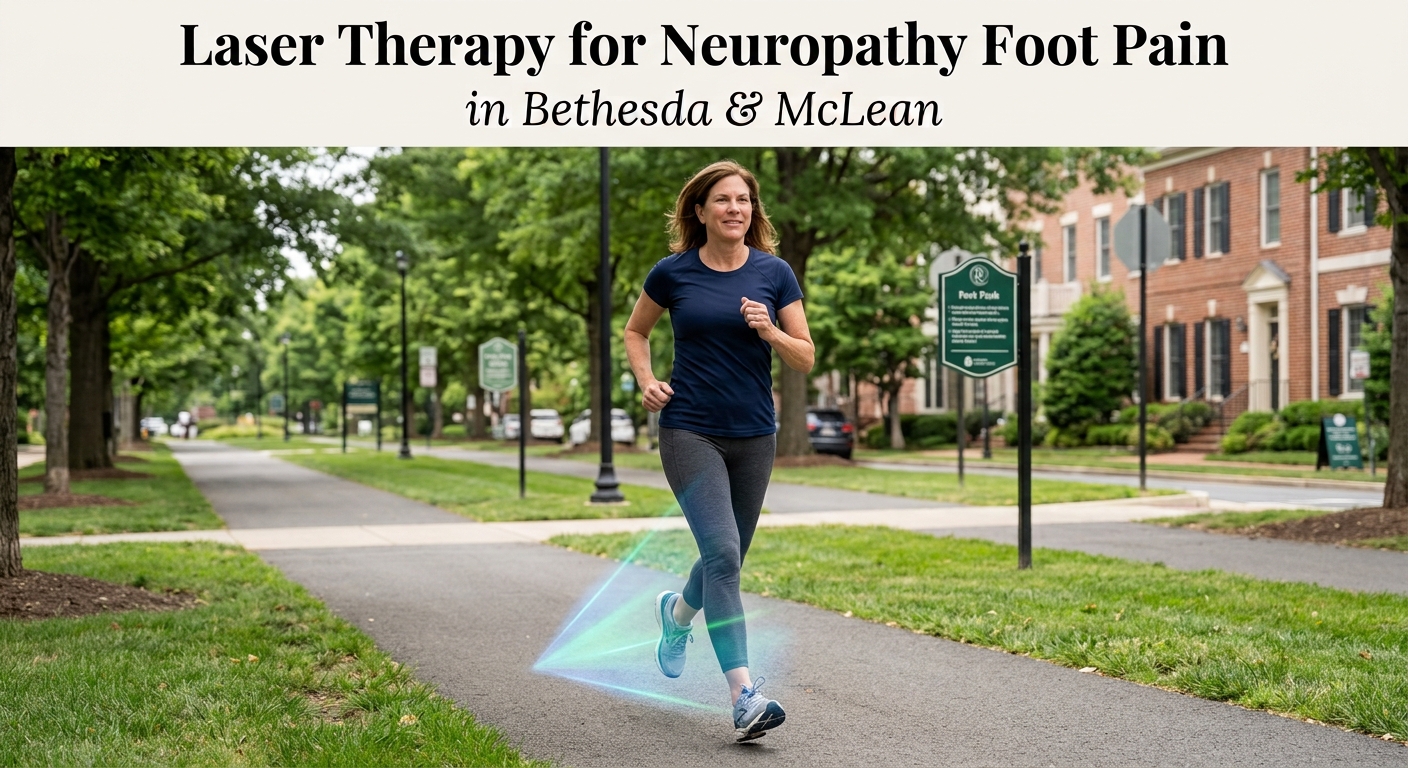
If your feet buzz, burn, or go numb the moment you finally sit down at the end of the day, you already know how disruptive nerve pain can be. Many patients in Bethesda and McLean describe the same pattern: a long day on their feet at work, a commute through DC traffic, and then hours of tingling or stabbing pain once they try to relax at home. For a growing number of these patients, laser therapy for neuropathy is offering real relief without the drowsiness, dizziness, or dependency that can come with long-term medication use.
At DD Podiatry, we see patients from Bethesda, McLean, and across the greater DC metro area who have already tried oral medications, compression socks, and topical creams with limited success. Laser therapy is one of the more promising tools we offer because it targets the underlying nerve tissue directly, rather than simply dulling the sensation of pain.
Peripheral neuropathy happens when the nerves that carry signals to and from your feet become damaged, inflamed, or starved of adequate blood flow. The most common causes we see in our Bethesda and McLean patients include diabetes, chemotherapy history, chronic alcohol use, vitamin deficiencies, and idiopathic neuropathy, where no clear underlying cause is ever identified.
The symptoms tend to follow a familiar pattern: numbness or a "pins and needles" feeling that starts in the toes and gradually creeps up the foot, burning pain that gets worse at night, sensitivity to light touch (even bedsheets can feel unbearable), and a loss of balance or coordination as sensation fades. Left unaddressed, advancing neuropathy can also raise the risk of unnoticed cuts, blisters, and infections — a particular concern for our diabetic patients.
Traditional treatment often starts and stops with prescription medications like gabapentin or duloxetine. These drugs can reduce the perception of pain, but they don't repair the nerve fibers causing it, and many patients experience fatigue, brain fog, or weight gain as side effects. That's part of why so many Northern Virginia and Montgomery County patients are searching for a non-drug alternative that addresses the source of the problem instead of just quieting the symptoms.
Laser therapy for neuropathy uses focused wavelengths of light, delivered through a handheld device, to penetrate the skin and reach the damaged nerve tissue underneath. This isn't the same as a surgical laser — there's no cutting, no needles, and no heat damage to the skin. Instead, the light energy is absorbed by the mitochondria inside your cells, essentially recharging their ability to repair themselves.
In practice, this stimulates three things that matter enormously for neuropathy patients:
We use MLS (multiwave locked system) laser therapy at both our Bethesda and McLean offices, which combines two synchronized wavelengths for deeper tissue penetration and a more consistent therapeutic effect than a single-wavelength laser. This class of treatment has become one of the most studied non-drug options for chronic nerve pain, and it's a technology we're proud to offer at both practice locations.
This type of treatment tends to work best for patients who are dealing with:
Patients with severe, longstanding nerve damage may see more modest results, which is why we always start with a thorough evaluation before recommending a treatment plan. During your consultation at our Bethesda or McLean location, Dr. Tran or Dr. Niktash will assess your nerve function with in-office testing, review your medical history and any prior treatments, and determine whether laser therapy — alone or combined with other regenerative treatments — makes sense for your specific case.
We hear a similar story from a lot of patients who commute into DC or spend long shifts on their feet: the numbness starts small, maybe just the big toe or the ball of the foot, and gets written off as "tired feet." By the time it's affecting sleep or balance, many patients have already been managing it quietly for a year or more. If that sounds familiar, an earlier evaluation generally means more treatment options and a better response to laser therapy for neuropathy.
One of the reasons this treatment appeals to busy patients across the DC metro area is how manageable it is to fit into a normal schedule. A typical session takes about 10 to 20 minutes, and there's no downtime afterward — you can drive yourself home, go back to work, or head out for a walk immediately.
Here's what a course of treatment usually looks like:
Many patients begin noticing changes in numbness, tingling, or nighttime pain within the first two to three weeks, though full results build gradually over the complete course of treatment. Some patients choose to pair sessions with custom orthotics or supportive footwear changes to protect the feet while nerve healing continues.
For diabetic patients specifically, we also review glucose control and circulation as part of the process, since stable blood sugar plays a major role in how well nerve tissue responds to any regenerative treatment. This is one reason our approach tends to look a little different from a generic pain clinic: we're podiatrists first, so foot health, gait, and vascular status are always part of the conversation, not an afterthought.
It's worth understanding how laser therapy for neuropathy compares to the other options patients typically try first:
For many patients, laser therapy for neuropathy is an effective starting point — either as a standalone treatment or as part of a broader regenerative medicine plan built around your specific diagnosis. Because it carries essentially no downside risk and no systemic side effects, it's often the first advanced option we discuss once conservative measures alone haven't been enough.
DD Podiatry was built around regenerative and conservative treatment options for foot and ankle conditions, and this approach to nerve pain fits squarely into that philosophy. Dr. Nam Tran and Dr. Miriam Niktash both take a whole-patient approach — looking at your circulation, your diabetes management if applicable, your footwear, and your daily activity before recommending a treatment path.
Patients throughout Bethesda, McLean, and the broader DC metro and Northern Virginia region choose us because we offer this technology at both of our locations, so you don't have to drive across the region for consistent care twice a week. We also combine laser therapy with other regenerative options like PRP and exosome injections when a patient's case calls for a more comprehensive approach to nerve and tissue healing, and we coordinate closely with your primary care or endocrinology team if diabetes is part of the picture.
We also know that neuropathy rarely shows up on its own. Many of the same patients dealing with nerve pain are also managing plantar fasciitis, arthritis, or general foot fatigue from years of standing or walking on hard DC-area sidewalks. Because we treat the whole foot and ankle, not just the nerve symptoms, your treatment plan can address multiple issues at once instead of sending you to three different specialists.
If numbness, burning, or tingling in your feet has been getting in the way of your sleep, your workouts, or your daily routine, you don't have to just manage it with medication indefinitely. Non-drug options for neuropathy are available now at both DD Podiatry locations, and a consultation is the best way to find out if this treatment is the right fit for your symptoms.
Call us at (301) 363-2676 to schedule an evaluation at either of our two convenient offices:
Same-week appointments are often available, and our team can walk you through what to expect — from your first evaluation to your last session — before you ever step into the office.
.png)
.png)
.png)